Updated: November 2026 · e-land editorial team
Disclaimer: The information in this article is general, correct as of the update date, and does not constitute investment, engineering or legal advice. Before purchasing a property, its specific details should be checked with an attorney, an appraiser and an engineer.
Not sure about a term? See our real estate glossary.
A view from the 25th floor, the quiet of a small building, or a yard of your own? Anyone looking for an apartment today faces three very different types of housing, each with a different price, different running costs and a different way of life. The choice between them is not only a question of budget: it determines how much you will pay every month for years, how much rent you will get, and how easy it will be to sell.
And the market is going upward: according to Central Bureau of Statistics data published in Calcalist, in 2020 only about 16% of the dwellings whose construction began were ground-level houses, and more than half were built in buildings of 8 floors or more. In this article we compare the three options, both for those buying to live in and for those buying to invest: costs, rentals, appreciation and questions that help decide.
In this guide: the pros and cons of each option, the investor's angle, a quick comparison table and questions to help you decide.
An apartment in a tower
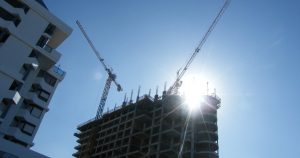
Residential towers are already a central part of construction in Israel. According to CBS data published in Calcalist, in the first three quarters of 2023, one in every five dwellings whose construction began was in a tower.
Advantages
- View and quiet: on the upper floors you are far from street noise, and sometimes enjoy an open view.
- Advanced infrastructure: underground parking, elevators, and sometimes a garbage chute on every floor.
- Shared amenities: a staffed lobby, and in some towers also a residents' club, gym or pool.
- Location: towers are usually built in city centers and close to public transport.
- A safe room in every apartment: as in every new building.
Disadvantages
- High management fees: according to data published in Bizportal, in luxury buildings with security, a pool and complex systems, residents pay about ILS 9 to 20 per sqm per month. For a 100 sqm apartment this can reach ILS 1,000 to 1,500 a month – ILS 120,000 to 180,000 over a decade. By comparison, in a regular building with an elevator it is ILS 130 to 180 a month.
- Long-term maintenance: elevators, fire suppression systems, electricity and parking garages require investment over the years. The Nadlan Center warns that the field is barely regulated, and that there is still no general obligation for a long-term maintenance fund in residential towers.
- Slow decisions: many residents mean many opinions on parking, renovations and maintenance.
- Dependence on elevators: waiting at peak times, and real difficulty when an elevator breaks down.
- Less privacy and community: many neighbors, and it is harder to get to know them.
An apartment in a boutique building
"Boutique building" is not a legal term but a marketing name for a small residential building, usually of a few floors and few apartments, with an emphasis on design and finish. It is therefore worth checking exactly what you are getting rather than relying on the name.
Advantages
- A small community: few neighbors, who are easy to get to know and with whom it is easier to reach agreement.
- Lower running costs: without security, a pool and complex systems, building committee fees are usually close to those of a regular building.
- Quiet and privacy: less traffic in the lobby and elevator, and usually fewer apartments on each floor.
- Design and finish: many projects are marketed with an upgraded specification and special apartments, such as garden and rooftop apartments.
Disadvantages
- Price per sqm: the design and specification may add to the price. It is worth comparing with similar transactions in the area.
- Fewer shared amenities: usually no club, gym or security.
- Few shoulders for large expenses: elevator repair, roof waterproofing or facade renovation are divided among few residents, and each pays a larger share.
- Dependence on neighbors: in a small building, one neighbor who does not pay or does not agree is felt more.
- The small-developer risk: small projects are sometimes built by small developers. Check the developer's experience and previous projects, and that your money is secured as required by law.
A private (ground-level) house
The term "private house" covers several types: a single-family house on its own plot, a semi-detached house with a shared wall, and terraced cottages. The differences between them affect the price, privacy and extension rights.
Advantages
- Privacy and space: a yard or garden, with no neighbors above or below.
- Full control: you decide when to renovate and what to invest in, without a residents' meeting and without management fees.
- Extension potential: if the plan applying to the plot allows it, rooms or a floor can be added. Check the zoning plan and the remaining rights before buying (see the real estate glossary).
- An increasingly rare product: as most new construction goes upward, a ground-level house is a sought-after product with limited supply.
Disadvantages
- Price and location: in central Israel a private house is very expensive. Cheaper options are usually far from employment centers, and longer commutes are part of the price.
- All maintenance is on you: roof, waterproofing, gardening, plumbing and facade. There is no building committee to share the cost.
- Municipal tax (arnona) and electricity: a larger area usually means higher arnona and heating and cooling bills.
- Security: without a lobby and close neighbors, many invest in an alarm, cameras and lighting.
- More complex checks: building violations, conformity of the existing house with the permit, and in many cases also the status of the land vis-à-vis the Israel Land Authority. Here it is especially important to work with an attorney and an appraiser.
The investor's angle: profit, appreciation and renting
Those buying to invest ask different questions from those buying to live in: who will rent the property, for how much, what will remain after expenses, and how easy will it be to sell in a few years. For residential apartments in Israel, rental yield usually ranges between 2.5% and 4% a year, and most investors' profit over the years has come from appreciation. For example, in 2024 apartment prices rose by 7.7%, and in 2025 the pace slowed and even a slight decline was recorded. Here is how this looks for each type of property.
A tower as an investment
- Rental demand: a central location and proximity to transport attract young tenants, couples and professionals working in business centers.
- Management fees and yield: in many rental contracts the tenant pays the management fees. But a tenant paying ILS 1,000 in management fees compares the total cost, so these fees limit the rent that can be asked. In months when the apartment is empty, they fall on the landlord.
- Appreciation: depends heavily on the condition of the building over the years. A well-maintained tower retains its value. A neglected tower becomes a hard-to-sell property.
- Liquidity: towers offer many similar apartments, so prices are easy to compare, but when selling you compete with other apartments in the same building.
A boutique building as an investment
- Stable rentals: the relatively low monthly cost attracts families looking to stay for a long time.
- Special apartments: garden and rooftop apartments in a small building are a product with limited supply, in demand both for sale and for rent.
- Urban renewal potential: a low, old building in a sought-after area may in the future enter a Pinui Binui project, in which the old apartment is replaced by a new, larger one. This is a possibility, not a promise, and the process itself is long.
A private house as an investment
- A lot of capital in one property: according to Yad2 data published in July 2026, the average price of a ground-level house is about ILS 2.49 million in Be'er Sheva, about ILS 4.85 million in Rehovot, and about ILS 6.87 million in Givatayim. Rent does not rise at the same pace as the price, so the rental yield tends to be lower.
- Land value: much of the value is the land itself, which remains even as the structure ages. Unused building rights can add value, for example through an extension or splitting off a housing unit, where the zoning plan allows it.
- Renting to families: tenants of a private house are usually families looking to stay for years, but maintenance of the entire house falls on the landlord.
Buying from a developer, in each type of property
Many investors buy a new apartment from a developer before construction is complete. The advantage: a price fixed today, payments spread over the construction period, and appreciation potential until handover. The risks: handover delays and a period with no rental income. Before buying from a developer, check the developer's experience and the status of the permit, and make sure every payment is secured as required by the Sale Law. We expanded on taxation and financing in the guide to investing in a rental apartment.
A quick comparison
| Tower | Boutique building | Private house | |
|---|---|---|---|
| Shared running costs | High | Low to medium | None, but everything is on you |
| Privacy | Low | Medium | High |
| Shared amenities | Many | Few | None |
| Control over decisions | Low | Medium | Full |
| Extension possibility | Almost none | Limited | According to the zoning plan |
| Typical location | City centers | Residential neighborhoods | Low-rise neighborhoods and towns |
How to choose? Questions worth asking
- What is the real monthly cost? Add management fees, arnona and maintenance to the mortgage repayment. In a tower, ILS 1,000 a month in management fees is like another small mortgage.
- What stage of life are you at? A family with young children looks for space and a yard. Those whose children have already left may prefer less maintenance and an elevator.
- How important are location and accessibility to you? Proximity to work, public transport and services is worth money and time.
- Who will look after the building in 20 years? In a tower, ask the developer about the management company and a maintenance fund. In a private house, plan the renovations yourself.
- What will you do if you want to sell? Check the demand for the type of property in the area, not just today's price.
We expanded on financing questions for each of the three options in the mortgage guide, and on the reasons construction is going upward in the article on the Israeli home dream.
The bottom line
No option always wins, but one will suit you. A tower offers a view, services and a central location, at the cost of high monthly fees and dependence on professional management. A boutique building offers quiet and lower costs, without services. A private house offers privacy and control, and requires a large budget and full responsibility. For investors, the key question is what will be left after all expenses and how easy it will be to sell. Those who choose by the total cost over the years, and not only by the purchase price, choose well.
Want updates on new articles and investment opportunities? Leave your details here and tick the box to receive updates.
Not sure about a term? See our real estate glossary.
📚 More guides you may find useful
Disclaimer: The information in this article is general, correct as of the update date, and does not constitute investment, engineering or legal advice. Before purchasing a property, its specific details should be checked with an attorney, an appraiser and an engineer.
Sources
-
Bizportal, on management fees in towers and regular buildings (September 2026): Link (in Hebrew)
-
Calcalist, on CBS data on ground-level and high-rise construction (2021): Link (in Hebrew)
-
Calcalist, on living in a tower vs. a low-rise building (sponsored content): Link (in Hebrew)
-
Nadlan Center, on long-term maintenance of towers: Link (in Hebrew)
-
Bizportal, on yields and apartment price increases (April 2025): Link (in Hebrew)
-
Ice, on ground-level house prices according to Yad2 data (July 2026): Link (in Hebrew)