Updated: November 2026 · e-land editorial team
Disclaimer: The information in this article is general, correct as of the update date, and does not constitute legal, tax, financial or investment advice. The data comes from public sources and may change. Nothing in this article is a recommendation to buy or sell a property. Before buying, check the specific property and consult professionals. Publication of a project on e-land does not constitute a recommendation of the project or a review of the developer.
Not sure about a term? See our real estate glossary.
🧮 Considering an apartment in Ra'anana? Run the numbers in our calculators: Rental yield · Purchase tax · How much can I borrow?
One of the highest average salaries in Israel, a school system at the top of the national rankings, a large city park and green, low-rise neighborhoods. Ra'anana has long been one of the most sought-after names in the Sharon region, and it is now entering a decade of growth: a new neighborhood in the west of the city has already gone to market, Ahuza Street is being replanned around a metro station, and the municipality is preparing a master plan for a much larger city.
In this guide you will find everything you need to know before buying in Ra'anana, to live in or to invest: who lives in the city, what an apartment costs, how you get around, what is being built and where the city is heading. Every figure is backed by a source, and the sources are listed at the end.
This is the third guide in the e-land city guides series, after Hod HaSharon and Kfar Saba. At the end of the series we will publish a comparative ranking of the cities by the same measures.
Ra'anana at a glance
| Measure | Figure |
|---|---|
| Population | About 86,000 residents (National Insurance, October 2026) |
| Socio-economic index | Cluster 8 of 10 (CBS, 2021) |
| Average salary per employee | ILS 22,308 a month, about 47% above the national average (National Insurance, 2025) |
| Median deal, 3-room apartment | About ILS 2.9 million (88 deals, July 2025 to June 2026) |
| 4-room apartment | Around ILS 3.3 million (reports, August–October 2026) |
| Annual change in average price | Down about 2.7% (H1 2026 vs H1 2025), with about 7% more deals |
| Asking rent, 3 rooms | About ILS 6,500 a month (November 2026) |
| Education | 33.2% eligible for 5-unit math matriculation, almost twice the national rate (Ministry of Education, 2025) |
| New and planned construction | Thousands of housing units, including Ra'anana West (5,535), Ahuza renewal (5,360) and Kfar Batya (2,200) |
An established city with one of the highest average salaries in Israel
Ra'anana was founded in 1922 as an agricultural moshava and has grown into one of the most established and sought-after cities in Israel. It belongs to cluster 8 of 10 on the CBS socio-economic index, and the average salary per employee is ILS 22,308 a month, compared with ILS 15,140 nationally. Among the large cities, only Herzliya had a higher average salary in the first half of 2025.
For buyers, this translates into deep and steady demand: families, high-tech employees, new immigrants and returning residents. Investors benefit too, because tenants in a city like this tend to be reliable and long-term. According to National Insurance, about 20% of residents are 65 or older, compared with about 13% nationally. This is a city people choose to stay in for years.
Education, health and lifestyle
Top-tier education. According to Ministry of Education data for the 2025 school year, 33.2% of Ra'anana's students are eligible for 5-unit math matriculation, placing the city among the top 10 local authorities in Israel on this measure. The national rate was 17.1%. 27.4% of students earned an excellence matriculation, compared with 14.4% nationally, and about 22% completed the "Bagrut-Tech" track, compared with 11.6% nationally.
Health. The Loewenstein rehabilitation hospital operates in the city, and Meir Medical Center in neighboring Kfar Saba is a short drive away.
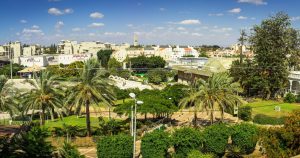
Park and green space. Ra'anana Park, with its lake, walking paths and activity areas, is the city's main leisure hub.
Lifestyle: religious and secular side by side. Ra'anana is a mixed city, home to a secular public, a large and active religious-Zionist community, and a large community of immigrants from English-speaking countries. Religious life is rich: according to the Hamichlol encyclopedia, Ra'anana had 80 synagogues in 2017. The school system gives one picture of the mix: according to figures published by the Kipa website in October 2026, about 2,000 students attend the city's three main state-religious schools, and about 4,500 attend its thirteen state schools. On the secular side, Ra'anana scored 5 out of 6 in the 2025 Shabbat Test by the Free Israel movement, after joining the "Na'im BaSofash" weekend transport initiative and running bus lines on Shabbat. In the same movement's 2021 Urban Freedom Index, the city ranked 14th of 31, well behind neighboring Kfar Saba in third place. In practice, some neighborhoods have a more distinct character, so it is worth getting to know the specific neighborhood before you buy.
What an apartment costs in Ra'anana
According to Klikat HaNadlan's analysis of Tax Authority data, the median deal for a 3-room apartment was about ILS 2,895,000, based on 88 deals between July 2025 and June 2026. The asking price in listings in November 2026 was almost identical, about ILS 2,890,000. A 4-room apartment trades at around ILS 3.3 million, and most deals fall between ILS 31,000 and 35,000 per square meter.
New apartments from developers. According to an analysis of 206 purchases of new apartments from developers between October 2025 and October 2026, the average price was about ILS 3.1 million for 3 rooms (about 85 sq m), about ILS 3.2 million for 4 rooms (about 100 sq m) and about ILS 4.2 million for 5 rooms (about 130 sq m).
A window of opportunity? Between the first half of 2025 and the first half of 2026, the average apartment price in Ra'anana fell by about 2.7%, while the number of deals rose by about 7.3%. In other words, demand has not gone away, but buyers now have more negotiating power. If you have been waiting for Ra'anana, the market today may be more favorable than it was a year ago.
Rent and yield. Asking rent for a 3-room apartment is about ILS 6,500 a month, and the estimated gross rental yield is about 2.70% a year. As in most established Sharon cities, investors in Ra'anana are mainly buying stability and long-term value preservation, not high monthly cash flow.
Comparison with neighboring cities (3-room apartment)
| City | Median deal | Asking rent | Estimated gross yield |
|---|---|---|---|
| Ramat HaSharon | ILS 3,225,000 | ILS 6,400 | 2.35% |
| Herzliya | ILS 2,960,000 | ILS 7,100 | 2.54% |
| Ra'anana | ILS 2,895,000 | ILS 6,500 | 2.70% |
| Hod HaSharon | ILS 2,525,000 | ILS 5,500 | 2.36% |
| Kfar Saba | ILS 2,070,000 | ILS 5,800 | 2.68% |
Ra'anana sits right alongside Herzliya and Ramat HaSharon in the table, and its gross yield is even slightly higher. Compared with neighboring Kfar Saba, the gap in the median deal is about ILS 825,000, while asking rent is only about ILS 700 higher. The yield in the table is annual asking rent divided by asking price, before taxes, expenses and financing.
Connected to the center, today and tomorrow
Rail today: Two railway stations serve the city, Ra'anana South and Ra'anana West, both on the Sharon line along Route 531. They opened in July 2018.
Highways: Route 4 runs along the city's eastern edge, Route 531 along its southern edge, and the Ayalon Highway lies to the west.
The metro is coming: The northern section of the M1 metro line has been approved by the National Infrastructure Committee, and it will link Ra'anana and Kfar Saba to the heart of the metropolitan area via Herzliya, Hod HaSharon and Ramat HaSharon. Several stations are planned in the city, including a central station under Ahuza Street at the corner of Ben Gurion Street. NTA has not yet published an operating date for the northern section of the line. NTA's published schedule (gradual opening from 2034, commercial operation in 2037) refers to the metro system as a whole, and the northern section of line M1 is not included in the first construction package. See all lines, their status and dates on our interactive map.
The vision: a city that is growing and renewing
Ra'anana is at the start of a development wave that will change the face of the city. These are the main plans, according to their known status at the time of writing:
| Plan | Scope | Status |
|---|---|---|
| Ra'anana West (Israel Land Authority plan) | 5,535 housing units, including 500 assisted-living units, plus an employment zone, on about 1,068 dunams | Approved for validation in 2023. A tender for 1,542 apartments in the "Target Price" program closed in April 2025 |
| Ahuza Street renewal | About 1,700 existing apartments to be replaced by about 5,360 new ones, plus about 100,000 sq m of commerce and employment, on about 523 dunams | Being advanced at the National Committee for Preferred Housing Sites (VATMAL), led by the municipality and the Government Authority for Urban Renewal. Not yet approved |
| Kfar Batya | 2,200 units: about 1,700 apartments and 500 assisted-living units, on about 158 dunams | Approved for deposit in June 2026, after a settlement between the developer and the municipality |
| Neve Zemer | About 3,500 units | A new-construction hub in the city |
| New master plan | Potential for about 12,000 additional apartments and a target of 130,000 to 135,000 residents | Early stage. Up to 13–15 floors along Ahuza, and more moderate building in the older neighborhoods |
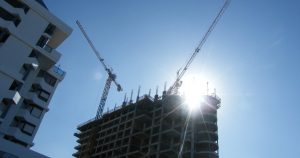
Alongside the large plans, urban renewal is already visible on the streets. On Klausner Street in the city center, for example, eight demolish-and-rebuild projects are running at the same time: three-story buildings are being replaced by seven-story buildings with safe rooms.
For buyers, these plans are both an opportunity and a challenge. On the one hand, they bring new apartments, public buildings, commerce and transport. On the other hand, some are still in planning, and timelines for large plans in Israel tend to stretch.
Who Ra'anana is right for
- Families looking for one of the best school systems in Israel, a large park and an established community.
- High-tech employees looking for an established Sharon city with quick access to Routes 4 and 531 and to the railway.
- Young couples following the discounted "Target Price" apartments in Ra'anana West, or small apartments in the new projects.
- Long-term investors looking for value preservation in a sought-after city and upside from urban renewal and the metro, who accept a moderate running yield.
- Owners of older apartments in the city center and along Ahuza, who may benefit from urban renewal projects.
What to check before you buy
- Plans nearby: Check the Planning Administration's plans database for the plans that apply to the property and its surroundings, and what stage they are at.
- Along Ahuza: If the property falls within the Ahuza renewal plan, remember that the plan has not yet been approved. Check its current status before you price in "potential".
- Urban renewal: If the building is in a pinui-binui or TAMA 38 process, check the project stage, the developer and the agreement with the residents.
- "Target Price": The discounted apartments in Ra'anana West are subject to eligibility conditions and restrictions. Check them on the Ministry of Construction and Housing website before you plan.
- Neighborhood character and Shabbat: Some neighborhoods have a more distinctly religious or secular character. Visit the street on Shabbat too, to see how it runs on that day: car traffic, nearby synagogues, businesses open or closed. Check with the municipality whether special Shabbat traffic arrangements apply to the street, and which schools and kindergartens operate nearby and in which stream.
- Actual deals: Compare the asking price with deals registered with the Tax Authority in the building and on the street.
- Transport: Metro timelines are not final. Do not base your decision only on a line that has not been built yet.
The bottom line
Ra'anana combines what buyers look for in the Sharon: an established community, top-tier education, green space and quality of life, and access to the center. After a year of easing prices, buyers today have more negotiating power, while the city itself is only beginning its big transformation. Buying in Ra'anana today means buying not only today's city, but also the city that will rise here over the next decade: a new neighborhood in the west, a renewed city center around Ahuza, and a metro linking it to the heart of Greater Tel Aviv.
Want to stay one step ahead of the market? Leave your details here and tick the box, and we will update you on new city guides and investment opportunities.
📚 More guides you may find useful
- Kfar Saba 2026: A Green, Established City in a Renewal Boom, the Guide for Buyers and Investors
- Hod HaSharon 2026: Community, Connectivity and a Development Boom, the Guide for Buyers and Investors
- How Much Does It Cost to Buy an Apartment in Israel in 2026: Every Cost Beyond the Price, and How to Save
Disclaimer: The information in this article is general, correct as of the update date, and does not constitute legal, tax, financial or investment advice. The data comes from public sources and may change. Before buying, check the specific property and consult professionals. Publication of a project on e-land does not constitute a recommendation of the project or a review of the developer.
Sources (in Hebrew unless stated otherwise)
-
National Insurance Institute, statistics by locality: Ra'anana (2025 wages, October 2026 population): Link
-
Mako, National Insurance wage report for the first half of 2025: Link
-
Nadlan Center, neighborhood index: Leicester, Ra'anana (2021 cluster, price and deal changes 2025–2026, construction hubs): Link
-
Klikat HaNadlan, prices, rents and yields in central and Sharon cities (November 2026), based on Yad2 and Tax Authority data: Link
-
Bizportal, Ra'anana: ILS 3.3 million for 4 rooms (August 2026): Link
-
Nadlan Center, Klausner Street and an analysis of 206 new-apartment deals (November 2026): Link
-
Israel Hayom, matriculation data by local authority, 2025 (October 2026), including the full data file: Link
-
i24NEWS, national matriculation data for 2025: Link
-
Hamichlol, Ra'anana (founding year and number of synagogues): Link
-
Calcalist, metro stations in Ra'anana and the Loewenstein rehabilitation hospital (2021): Link
-
Kipa, state and state-religious school figures in Ra'anana (October 2026): Link
-
Nefesh B'Nefesh, Ra'anana community guide (English): Link
-
Maariv, Free Israel's 2021 Urban Freedom Index: Link
-
ice, Free Israel's 2025 Shabbat Test: Link
-
Hamichlol, Ra'anana South railway station: Link
-
Globes, approval of the northern section of the M1 metro line (English): Link
-
Globes, the metro station at Ahuza and Ben Gurion (English): Link
-
ice, Ra'anana West plan approved for validation: Link
-
Calcalist, "Target Price" tender for 1,542 apartments in Ra'anana West (April 2025): Link
-
Israel Hayom, the Ahuza Street renewal plan (July 2026, content produced in cooperation with the Ra'anana municipality): Link
-
Nadlan Center, Kfar Batya plan approved for deposit (June 2026): Link
-
Bizportal, Ra'anana's new master plan (October 2026): Link
Featured image: אלעדבד7, "West Ra'anana complex", Wikimedia Commons, licensed under CC BY-SA 4.0. The image was cropped from the original, and the cropped version is distributed under the same license.