Updated: November 2026 · e-land editorial team
Disclaimer: The information in this article is general, correct as of the update date, and does not constitute legal, tax, financial or investment advice. The data comes from public sources and may change. Nothing in this article is a recommendation to buy or sell a property. Before buying, check the specific property and consult professionals.
Not sure about a term? See our real estate glossary.
🧮 Considering an apartment in Kfar Saba? Run the numbers in our calculators: Rental yield · Purchase tax · How much can I borrow?
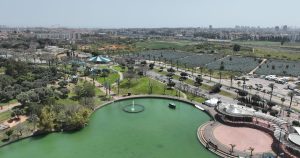
A city of about 100,000 residents with a green heart, a major hospital inside the city, one of the strongest school systems in Israel, and a short drive to Greater Tel Aviv. Kfar Saba is one of the most sought-after cities in the Sharon region, and it is now entering a decade of change: the old industrial zone is becoming a residential and business district, older neighborhoods are being renewed, and a metro line is on the way.
In this guide you will find everything you need to know before buying in Kfar Saba, to live in or to invest: who lives in the city, what an apartment costs, how you get around, what is being built and where the city is heading. Every figure is backed by a source, and the sources are listed at the end.
This is the second guide in the e-land city guides series, after Hod HaSharon. At the end of the series we will publish a comparative ranking of the cities by the same measures.
Kfar Saba at a glance
| Measure | Figure |
|---|---|
| Population | About 100,000 residents (CBS and National Insurance, 2024–2026) |
| Socio-economic index | Cluster 8 of 10 (CBS, 2021) |
| Average salary per employee | ILS 19,927 a month, about 32% above the national average (National Insurance, 2025) |
| Median deal, 3-room apartment | About ILS 2.07 million (166 deals, July 2025 to June 2026) |
| Annual change in average price | About +11.3% (Q1 2026 vs Q1 2025, CBS) |
| Asking rent, 3 rooms | About ILS 5,800 a month (November 2026) |
| Education | 31.2% eligible for 5-unit math matriculation, almost twice the national rate (Ministry of Education, 2025) |
| Health | Meir Medical Center, a general hospital inside the city |
| New and planned construction | Thousands of housing units in approved and planned schemes, including Park HaMovil (2,134) and Yoseftal (4,140) |
An established city with lasting demand
Kfar Saba was founded as a moshava (agricultural colony) in the early 20th century and has grown into one of the largest and most established cities in the Sharon. It is ranked in cluster 8 of 10 on the CBS socio-economic index, and the average salary per employee is ILS 19,927 a month, compared with ILS 15,140 nationally.
For buyers, this translates into two things: stable long-term demand, and quality tenants for investors. It is no coincidence that Kfar Saba is a city young families want to stay in, and the municipality is promoting dedicated affordable-housing projects for local residents.
Education, health and lifestyle
Excellent education. According to Ministry of Education data for the 2025 school year, 31.2% of the city's students are eligible for 5-unit math matriculation, placing Kfar Saba among the top 15 local authorities in Israel on this measure. The national rate was 17.1%. About 22% of students completed the "high-tech matriculation" track (5-unit math, 5-unit English and physics or computer science), compared with 11.6% nationally.
A hospital inside the city. Meir Medical Center, one of the large general hospitals in the Sharon, is located in Kfar Saba and also serves the neighboring cities. For families and older residents, being close to a general hospital is a real everyday advantage.
A secular-liberal and diverse lifestyle. In the 2022 Municipal Freedom Index of the Israel Hofsheet movement, which examined 31 cities, Kfar Saba was ranked right after Ramat Gan, which came fifth. In the movement's 2025 Shabbat Test the city scored 5 out of 6, together with Hod HaSharon. At the same time, the city is home to diverse communities and to schools for all streams of education.
What an apartment costs in Kfar Saba
According to Klikat HaNadlan's analysis of Israel Tax Authority data, the median deal for 3-room apartments was about ILS 2,070,000, based on 166 deals between July 2025 and June 2026. The asking price in listings in November 2026 was about ILS 2,600,000. An asking price is not a deal price, so always compare with deals registered in the specific building and neighborhood.
Prices on the rise. According to CBS data, Kfar Saba and Tel Aviv were the only two cities with a double-digit increase in the average apartment price in Q1 2026 compared with a year earlier: 11.3% in Kfar Saba.
Rent and yield. The asking rent for a 3-room apartment is about ILS 5,800 a month, and the estimated gross rental yield is about 2.68% a year. As in most Sharon cities, investors in Kfar Saba buy mainly for stability and long-term appreciation rather than high current cash flow.
Comparison with neighboring cities (3-room apartment)
| City | Median deal | Asking rent | Estimated gross yield |
|---|---|---|---|
| Ra'anana | ILS 2,895,000 | ILS 6,500 | 2.70% |
| Herzliya | ILS 2,960,000 | ILS 7,100 | 2.54% |
| Hod HaSharon | ILS 2,525,000 | ILS 5,500 | 2.36% |
| Kfar Saba | ILS 2,070,000 | ILS 5,800 | 2.68% |
| Rosh HaAyin | ILS 2,000,000 | ILS 5,450 | 3.09% |
The median deal in Kfar Saba is about ILS 825,000 lower than in neighboring Ra'anana, while the asking rent is only about ILS 700 lower, which makes Kfar Saba a relatively accessible entry point to the established Sharon. The yield in the table is the annual asking rent divided by the asking price, before taxes, expenses and financing.
Connected to the center, today and tomorrow
Rail today: two stations on the Sharon Railway serve the city, Kfar Saba–Nordau and Hod HaSharon–Sokolov, both on the border with Hod HaSharon. The exit from Nordau station leads to Kfar Saba. The line runs through Petah Tikva and Bnei Brak to the Tel Aviv stations and continues south.
Highways: the city lies between Route 4 to the west and Route 6 to the east, and Route 531 runs along its southern edge.
The metro is coming: the northern section of the M1 metro line has been approved by the National Infrastructure Committee. It will link Kfar Saba and Ra'anana to the heart of the metropolis via Herzliya, Hod HaSharon and Ramat HaSharon. The committee later also approved an extension of about 2.5 km eastward, with a station in the Yoseftal neighborhood and an integrated transport hub called "Kfar Saba North" linking the metro to the Eastern Railway. According to reports, the extension is not expected to operate before 2042, and NTA has not yet published an operating date for the northern section of the line. NTA's published schedule (gradual opening from 2034, commercial operation in 2037) refers to the metro system as a whole, and the northern section of line M1 is not included in the first construction package. See all lines, their status and dates on our interactive map.
The vision: a city in renewal
Kfar Saba is at the start of a development wave that will change the face of the city. These are the main plans, according to their known status at the time of writing:
| Plan | Scale | Status |
|---|---|---|
| Park HaMovil (old industrial zone) | 2,134 units, housing, employment and retail on about 615 dunams | Published for validation in October 2026. Part of the area requires further detailed planning |
| Yoseftal neighborhood renewal (TML 2040) | 4,140 units in total, about 3,200 of them new | Approved in principle by the local committee (January 2026). Early planning stage |
| Kiryat HaTze'irim (TML 1088) | About 3,200 units, including affordable housing and long-term rental | Joint project of the municipality and the Israel Land Authority |
| Kaniel-Braun (northwest of the city) | 880 apartments and 500 assisted-living units | Approved for validation in March 2026. The municipality has petitioned the District Court against it |
| North Ben Yehuda (TML 3014) | 7,000 to 12,000 units according to reports | Preliminary planning in the national preferred-housing committee. The municipality opposes the plan and is acting against it |
Alongside the large plans, smaller urban renewal projects are moving forward. For example, a pinui-binui (demolish and rebuild) project by Ynov and Best with about 400 units is expected to start construction in 2027, according to the Nadlan Center. Renewal is concentrated mainly in the older neighborhoods in the city center and south.
For buyers, these plans are both an opportunity and a challenge. On the one hand, they bring new apartments, public buildings and infrastructure. On the other hand, some are controversial, and timelines for large plans in Israel tend to stretch.
Who Kfar Saba is right for
- Families looking for a strong school system, nearby health services and an established city with community life.
- Young couples who want to enter the Sharon at a price that is relatively accessible compared with Ra'anana and Herzliya, and to follow the city's affordable-housing projects.
- Long-term investors looking for stable demand and appreciation potential from urban renewal and the metro, who accept a moderate current yield.
- Owners of older apartments in renewing neighborhoods, who may benefit from pinui-binui projects.
What to check before buying
- Nearby plans: check the Planning Administration's plan database to see which plans apply to the property and its surroundings, and at what stage they are.
- "Investment land" in North Ben Yehuda: parcels in the area are being offered at low prices. The plan is still in preliminary planning and is controversial. Before such a purchase, check the zoning, the state of the rights and the expected timelines with a real estate lawyer.
- Urban renewal: if the building is in a pinui-binui or TAMA 38 process, check the project stage, the developer and the agreement with the residents.
- Actual deals: compare the asking price with deals registered with the Tax Authority in the building and on the street.
- Transport: the metro timelines are not final. Do not base your decision only on a line that has not been built yet.
The bottom line
Kfar Saba combines what buyers look for in the Sharon: an established community, high-level education, a hospital inside the city and access to the center. Its prices are still lower than in Ra'anana and Herzliya, and demand keeps pushing them up. Buying in Kfar Saba today means buying not only today's city, but also the city that will rise here over the next decade: a new district in place of the industrial zone, renewed older neighborhoods, and a metro that will connect it to the heart of Greater Tel Aviv.
Want to stay one step ahead of the market? Leave your details here and tick the box, and we will keep you posted on new city guides and investment opportunities.
📚 More guides you may find useful
- Hod HaSharon 2026: Community, Connectivity and a Development Boom, the Guide for Buyers and Investors
- How Much Does It Cost to Buy an Apartment in Israel in 2026: Every Cost Beyond the Price, and How to Save
- Investing in a Rental Apartment in Israel 2026: Growing Demand, Rising Rents and a Guide to Investing Smartly
Disclaimer: The information in this article is general, correct as of the update date, and does not constitute legal, tax, financial or investment advice. The data comes from public sources and may change. Before buying, check the specific property and consult professionals.
Sources (mostly in Hebrew)
-
National Insurance Institute, statistics by locality: Kfar Saba (salaries 2025, population 2026): Link
-
Nadlan Center, neighborhood index: Rishonim and Tkuma, Kfar Saba (population 2024, cluster 2021): Link
-
Klikat HaNadlan, prices, rent and yield in central and Sharon cities (November 2026), based on Yad2 and Tax Authority data: Link
-
ice, apartment prices in Q1 2026 according to CBS (May 2026): Link
-
Israel Hayom, matriculation data by local authority, 2025 (October 2026), including the full data file: Link
-
i24NEWS, national matriculation data for 2025: Link
-
Hamichlol, Meir Medical Center: Link
-
Maariv, Israel Hofsheet Municipal Freedom Index: Link
-
ice, Israel Hofsheet Shabbat Test 2025: Link
-
Hamichlol, Kfar Saba–Nordau railway station: Link
-
Globes, approval of the M1 northern section (in English): Link
-
Bizportal, M1 extension with 2 stations in Kfar Saba approved: Link
-
Walla, metro extension to Kfar Saba North: not before 2042: Link
-
Bizportal, Kfar Saba: Park HaMovil plan approved (October 2026): Link
-
ice, Yoseftal neighborhood renewal plan (January 2026): Link
-
Maariv, the Young Residents Project and Kiryat HaTze'irim in Kfar Saba: Link
-
Nadlan Center, the Kaniel-Braun plan in Kfar Saba (November 2026): Link
-
Nadlan Center, the North Ben Yehuda plan (November 2025): Link
-
Nadlan Center, Ynov and Best pinui-binui in Kfar Saba: Link
Featured image: Tomer hu, "Panoramic view of Beit Aharonovich and the Arim Mall plaza", Wikimedia Commons, licensed under CC BY-SA 3.0. The image was cropped from the original, and the cropped version is distributed under the same license.