Updated: October 2026
Disclaimer: The information in this article is general and does not constitute investment, legal or tax advice. Past returns do not guarantee future returns. Before any investment, we recommend consulting professionals.
Why do so many Israelis build their future on real estate?
Ask almost any family in Israel and you will hear about an apartment bought twenty years ago that is worth several times as much today, or a plot that grandfather bought "in the middle of nowhere" that became a neighborhood. This is no coincidence. Real estate is a tangible asset that you can live in, rent out and pass on to the next generation – and in Israel it has a particularly strong tailwind.
Israel's population is growing at one of the fastest rates in the Western world, and the land is not growing with it. Every new family needs a home, every home needs land, and so over the long term real estate prices in Israel have risen over decades. Those who bought at the right time and held on patiently have, in most cases, enjoyed significant appreciation.
As with any investment, there have also been periods of declines or stagnation, and not every property performed equally well. The difference between a good deal and a disappointing one almost always lies in the right choice and in due diligence before the purchase.
Agricultural land: everything built today was once a field
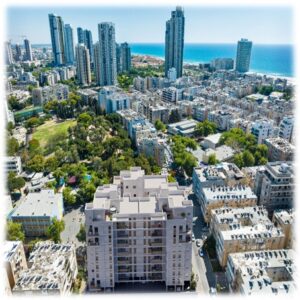
The new neighborhoods in Hod HaSharon, Ra'anana, Kfar Saba, Modi'in and dozens of other cities were built on land that was once agricultural. As a city expands, the planning authorities change the designation of the land on its outskirts, and whoever holds that land at that moment enjoys a jump in its value. This is the idea behind investing in agricultural land: buying today, at the price of agricultural land, what may become building land tomorrow.
The advantages of investing in agricultural land:
- Low entry price: agricultural land costs only a small fraction of the price of land already approved for construction, so it is possible to invest with modest initial capital.
- High appreciation potential: when land is rezoned from agricultural use to construction, its value can rise several times over.
- An asset registered in your name: in private land, your share is registered in the Land Registry (Tabu) and is an asset in every respect.
- Almost no ongoing expenses: no tenants, no repairs and no management fees. The land simply waits.
- An intergenerational asset: many families hold land as long-term savings for their children and grandchildren.
And what you need to know to do it right:
- Time: rezoning can take many years, and there is no guaranteed date. It suits money that can be set aside for the long term.
- Not every plot will be rezoned: location and planning status are what distinguish land with a real chance from land that will remain agricultural.
- What happens on the day of rezoning: part of the area is allocated to roads and public buildings, and a betterment levy is paid on the increase in value. This is part of the equation and should be factored into the calculation in advance.
- Liquidity: agricultural land is usually sold as a share in jointly owned land, so a sale may take time.
- Choose who you work with: in the past, some marketers sold land at inflated prices with unfounded promises. Independent due diligence is the best way to protect yourself.
Private land in Israel is a rare commodity
Most of the land in Israel, about 93%, is owned by the State and the Jewish National Fund and is managed by the Israel Land Authority. Only about 7% of the land is privately owned. This means that private land, especially in high-demand areas, is a limited resource that only shrinks over the years. This is one reason why private land in a good location is considered a sought-after asset.
8 checks every smart investor makes before buying land
- Ownership: the land is privately owned and registered in the Land Registry, and the registry extract is free of liens, attachments and third-party caution notes.
- Planning status: what is the current designation, and is there an approved plan, or one in preparation, that changes it? This is checked on the Planning Administration website and with the local planning committee.
- Restrictions: the land is not designated as a nature reserve, national park or antiquities site, and has no power lines or infrastructure that would prevent future construction.
- Location: proximity to an existing town and to areas already planned for construction increases the chance of rezoning.
- Price: comparison with similar transactions in the area, preferably with the help of an independent real estate appraiser.
- Co-ownership agreement: in jointly owned land, an agreement defining each buyer's share and how decisions are made.
- Survey: a survey plan of the plot prepared by a licensed surveyor.
- Legal representation: an attorney who represents only you in the transaction.
Those who carry out these checks enter a deal with their eyes open, and significantly increase the chance that their investment will be one of the success stories.
About e-land
e-land brings together information, articles and listings of properties and projects in Israel from developers, contractors, brokers and property owners, to help you find opportunities and compare them. The information in listings is provided by the advertisers and is not reviewed in depth by the website.
Disclaimer: The information in this article is general and does not constitute investment, legal or tax advice. Past returns do not guarantee future returns. Before any investment, we recommend consulting professionals.